

Taxila offers a view of Pakistan that reaches well beyond the history of its modern cities. The UNESCO World Heritage property is a group of archaeological remains associated with successive settlements and with Buddhist religious life. For a visitor, the interest lies in seeing how people lived, built, and exchanged ideas over a long stretch of time, rather than in treating the name as a single enclosed attraction.
See Taxila as a cluster of sites, not one ruin
It helps to know from the start that Taxila is a collection of places. Plan a selective visit around the museum and a small number of sites, using current access information and advice for the exact route. A long list of ruins is less useful than a day with a clear historical thread.
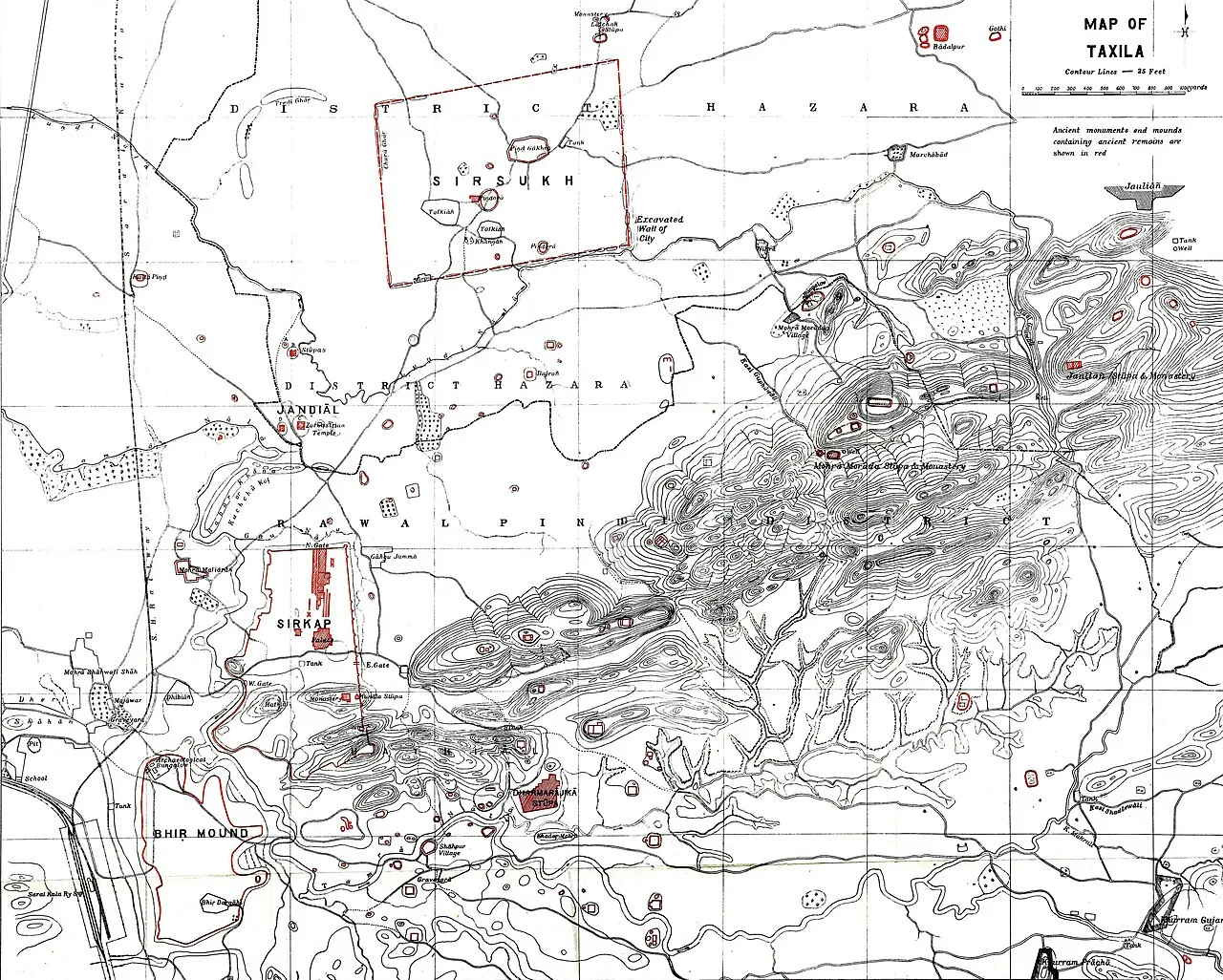
UNESCO describes Taxila through several stages of urban development, and through influences associated with Persia, Greece, and Central Asia. Those connections provide context, but they do not mean every excavated area belongs to the same period or tells the same story. Before travelling, look at a map that identifies the individual archaeological sites. Note which places interest you, and ask a knowledgeable guide how they relate to one another. That prevents the day from becoming a series of names with little sense of chronology.
For a first visit, choose a question to follow. You might want to see how streets were arranged, how religious buildings differed from houses, or how objects reveal contact between cultures. A specific interest makes the remaining walls and floors easier to interpret.
Start with Taxila Museum
Taxila Museum can help you connect excavated objects with the places you will see outside. Confirm current opening arrangements and ask which displays are accessible before you set the order of the day. Allow enough time to read labels and to compare a few objects carefully. Look at materials, decoration, and intended use. A small everyday object can be as revealing as a major sculpture when someone explains where it was found and what it suggests about life in the area.
If you are visiting with a guide, ask them to identify a few objects that relate directly to your later stops. Those connections give you something concrete to recognise when you reach an excavated settlement or a religious complex.
Read the layout at Sirkap
Sirkap is one of Taxila’s historic settlement sites. The Department of Archaeology and Museums identifies it in Punjab’s Rawalpindi district and describes a defended town with substantial excavated remains. At a settlement site, begin with the plan. Ask where the main routes ran and how the surviving spaces are understood. It is easier to imagine a functioning town when you can distinguish the movement of people through it from isolated stretches of stonework.
Stay on permitted routes and avoid climbing on remains for a photograph. What appears to be a convenient seat or viewpoint may be part of the archaeology. Comfortable shoes and a manageable pace help you pay attention, without constantly watching where to put your feet.
Add another site only when it deepens the visit
Depending on access and the route, you could add Bhir Mound or Dharmarajika as a further stop. Bhir Mound offers another settlement context, while Dharmarajika is associated with Buddhist religious remains. Ask the guide which would add most to the theme you chose at the museum, rather than trying to see every named place in one day.
Do not assume that every place marketed under the Taxila name falls under the same regional travel advice. The wider group includes sites across administrative boundaries. Check each proposed stop, and the roads between them, before agreeing to an itinerary. This matters if someone offers an expanded tour after you arrive. Request the exact place names and assess the route, rather than accepting an unspecified extra excursion.
Build the excursion into a realistic day
Travellers making a history-focused visit to Pakistan can treat Islamabad as a practical gateway, then plan accommodation and the Taxila excursion separately around confirmed local arrangements. Avoid placing the excursion immediately after a tiring overnight flight, or just before an international departure. Give it a day when you have the energy to follow explanations and can adjust the schedule if necessary.
Arrange reputable transport and clarify whether the quote includes waiting time, guiding, and admission. Ask about food stops, drinking water, and how much walking is involved. Those details have more effect on the quality of the day than adding another archaeological site to the list.
Leave the archaeology where it belongs
Leave objects where they are and follow the site’s instructions. If you want a souvenir, choose something clearly sold through a legitimate outlet and check any relevant restrictions. An object offered as an ancient find should never become an impulsive purchase.
For your own record, note the names of the places you visited and a few details you want to read about later. Photographs become more useful when you know what they show and why they interested you. Confirm regional advice and site access shortly before travel. Taxila’s history is complex, but a first visit can remain straightforward when you follow a small number of connected places and give them enough attention.