
 Whether you need a car in the San Francisco Bay Area depends on where you plan to live and how you’ll spend your days. Many guides focus on San Francisco proper, but the region spans nine counties, and the local 511 trip planner lists thirty-six separate transit agencies. Living in the Mission District and working in SoMa has almost nothing in common with living in Sunnyvale and commuting daily to Fremont. Geography, commute patterns, budget and length of stay all shape your needs, so a simple yes or no falls short. Here are the factors that decide whether you can ditch the car.
Where you can skip the car
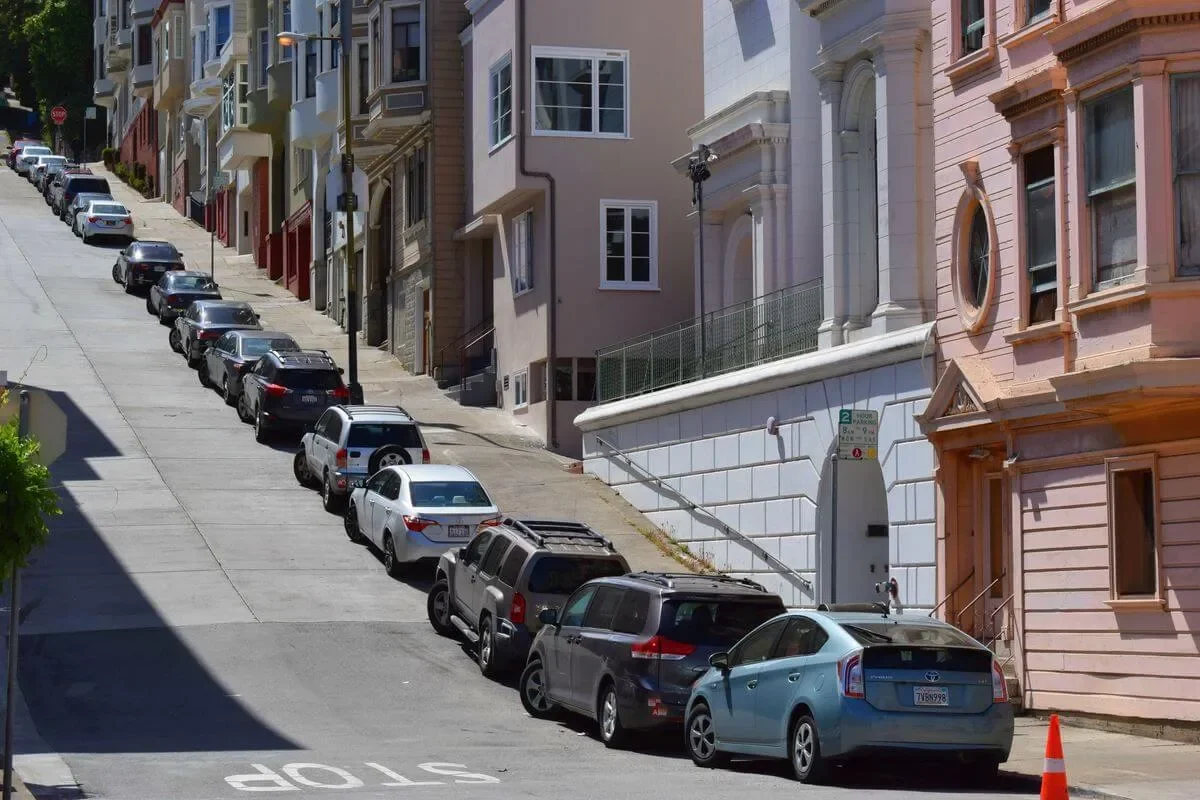
San Francisco. Inside the city, owning a car often creates more problems than it solves. Muni buses and light rail serve most neighborhoods, BART connects downtown to the East Bay and San Francisco International Airport, and everyday errands are very walkable. Parking is a constant headache: street spots are scarce in popular areas, many blocks require residential permits for long-term parking, and renting a garage space adds a heavy monthly fee. Vehicle break-ins are also a concern in parts of the city, and residents learn to leave nothing visible in the cabin, not even a loose charging cable. For anyone who both lives and works in the city, going car-free is realistic.
Berkeley and Oakland. Downtown Berkeley and large parts of Oakland work well without a car thanks to BART and AC Transit. UC Berkeley’s guidance for visiting summer students notes that many get around the East Bay by public transit, bicycle, rideshare or on foot. Bike theft is widespread, so a heavy-duty U-lock is a must. In the Oakland and Berkeley hills, bus service thins out and walking routes get steep.
Where a car starts to matter
The Peninsula and South Bay. The equation changes as you head south. Palo Alto, Mountain View, Sunnyvale, Santa Clara and San Jose grew up around car culture, with sprawling road networks, isolated office parks and residential areas spread over long distances. Caltrain is the backbone of the Peninsula, and since its switch to fully electric trains, trips are faster, with service running between San Francisco and San Jose throughout the day. But it follows a single rail corridor, so if your home or office is away from a station you need a connecting bus, bike or rideshare at both ends of every trip.
BART reaches the northern edge of the South Bay through stations in Milpitas and north San Jose, but it bypasses major employment hubs like Palo Alto and Mountain View. Many large tech campuses are far from the nearest rail stop. Employers sometimes run private shuttles, and Stanford operates its free Marguerite shuttle around campus and nearby areas, but these follow fixed routes and schedules. Grocery runs, weekend trips and late nights at the office rarely line up with shuttle timetables.
Cross-bay and reverse commutes. Commute direction is the factor newcomers most often underestimate. Many jobs involve crossing the bay, such as Fremont to Palo Alto or Oakland to South San Francisco, and doing that by transit often means several transfers across separate regional networks. Driving at rush hour can be painfully slow, but it gives you control over route and departure time. Fares, schedules and coverage change as you cross city and county lines, and a trip that looks simple on a map can involve two or three transit systems.
Shift workers and healthcare staff. Traveling nurses and hospital staff need special consideration. Twelve-hour shifts starting or ending near 7 a.m. or 7 p.m. rarely match transit timetables, and many medical centers are far from rail lines. Employee parking can also be tight, so check the situation with your facility before you arrive. For a nurse on a contract of around thirteen weeks, reliable personal transport is rarely a luxury.
The cost question
Car ownership is expensive anywhere, and the Bay Area amplifies it. According to the American Automobile Association, owning and operating a new vehicle costs roughly $11,577 a year, or close to $965 a month, once you count depreciation, insurance, fuel, maintenance, registration and financing. High regional gas prices and expensive paid parking push the local figure higher.
The alternatives compare like this. Rideshare is great for an occasional night out, but daily commutes add up quickly. Traditional rentals are convenient for weekend getaways but punishing over multi-month stretches, and drivers under twenty-five face steep young-driver surcharges. Peer-to-peer platforms such as Turo let drivers aged eighteen and older book vehicles, but primary drivers aged eighteen to twenty-four pay mandatory daily young-driver fees. Vehicle subscriptions from national brands such as Sixt+ or Flexcar offer flexibility, though age limits, mileage caps and local inventory mean you should read the fine print. Buying a car makes sense if you’re putting down roots for years, but for a stay of a few months you’ll likely lose money to depreciation, sales tax and the hassle of reselling.
Length of stay changes everything
Most relocation guides skip the difference between a permanent resident and a seasonal worker. Someone moving for good faces a different calculation from a summer intern. If you’re staying permanently, buying a car or signing a multi-year lease spreads the cost over a long horizon. But thousands of people arrive for tightly capped periods: summer engineering interns at tech companies, co-op students from universities such as Waterloo, visiting academics and traveling nurses. A multi-year commitment makes no sense for them.
That gap has opened the door to month-to-month leasing. Some local providers structure programs for stays of two months or longer, with registration and routine maintenance bundled into a flat monthly price, and some accept drivers aged eighteen and older with a valid license and full-coverage insurance without young-driver fees, which is a relief for undergraduate interns priced out of traditional options.
Whatever route you choose, settle some practical questions up front. What’s included in the monthly payment and what isn’t? Who pays road tolls, parking tickets and traffic violations (typically the driver)? Is there a mileage cap? Do you need your own insurance policy, and does it cover a leased or rented vehicle? Are international driver’s licenses accepted without extra verification? That last question matters for international students and visiting researchers, because policies vary widely and getting coverage without a U.S. driving history takes planning.
A quick way to decide
- If you live and work within easy walking distance of BART, Muni or Caltrain stations, you probably don’t need a car.
- If your commute crosses the bay or relies on several transit agencies, a car will likely save hours each week.
- If you work early-morning, late-night or rotating shifts, lean toward having a vehicle.
- If you’re staying less than a year, skip buying and look at flexible short-term leasing.
Many people find a middle ground. They go car-free during the workweek and rent a vehicle for a weekend trip to Big Sur or Lake Tahoe, or they keep a car while settling in and shed it once they find housing near transit. There’s no single right answer, only the arrangement that matches your schedule and lifestyle.
Frequently asked questions
Can you live in San Francisco without a car? Yes, for most residents. Muni, BART, walking and biking cover daily commuting and errands, and high parking costs make a car an unnecessary burden.
Is public transportation good in Silicon Valley? Options are more limited than in San Francisco. Caltrain, VTA and BART serve specific corridors in the South Bay, but many offices and residential complexes are far from any station, so you need a car or bicycle for the last few miles.
Do I need a car for a summer internship in the Bay Area? It depends on where you live and work. Interns based in San Francisco often skip a car, while those at sprawling Peninsula or South Bay campuses far from Caltrain usually find one very helpful.
Can I rent a car in California if I’m under twenty-one? Some providers allow drivers aged eighteen and older, but many charge young-driver surcharges, restrict vehicles or set a minimum age of twenty-one or twenty-five. Check age requirements and fees before booking.
Is it cheaper to rent monthly or buy a car for a few months? For stays under a year, a monthly rental or short-term lease is often cheaper once you count depreciation, sales tax, registration and the time needed to sell the car when you leave.
Can international students drive in California? Generally, international visitors can drive legally with a valid license from their home country, though people who establish residency are expected to get a California license. Insurers and car providers have their own eligibility rules, so confirm details before you arrive.